
Blog
Ask the Expert: A Casa de Monte Vista Wedding
March 19, 2026 | Ask the Experts
When Color Brings a Spanish Estate to Life
Ask the Expert is an IDo Venues series that pulls back the curtain on real weddings—looking at what works, what doesn’t, and why certain designs feel so right in a space.
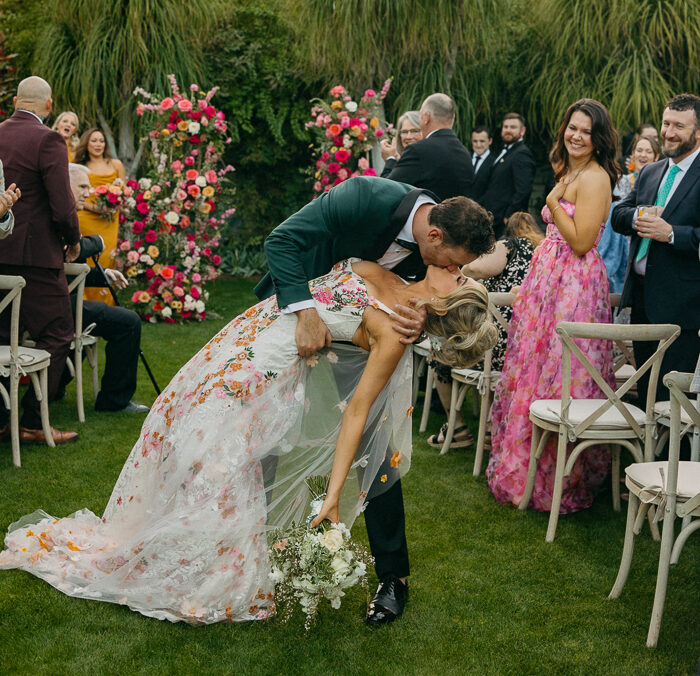
There are some venues that ask you to simplify your design. This is not one of them. From the moment you step inside, it hits—this place is a showstopper. A Casa de Monte Vista wedding leans all the way into its setting: white stucco, terracotta tile, layered greenery, and that unmistakable old Palm Springs meets vintage Hollywood energy. Sun-drenched, a little cinematic, and the kind of place where something interesting always feels just about to happen. The question isn’t how you elevate it. It’s whether you can keep up with it—and that’s exactly what makes this property so compelling.
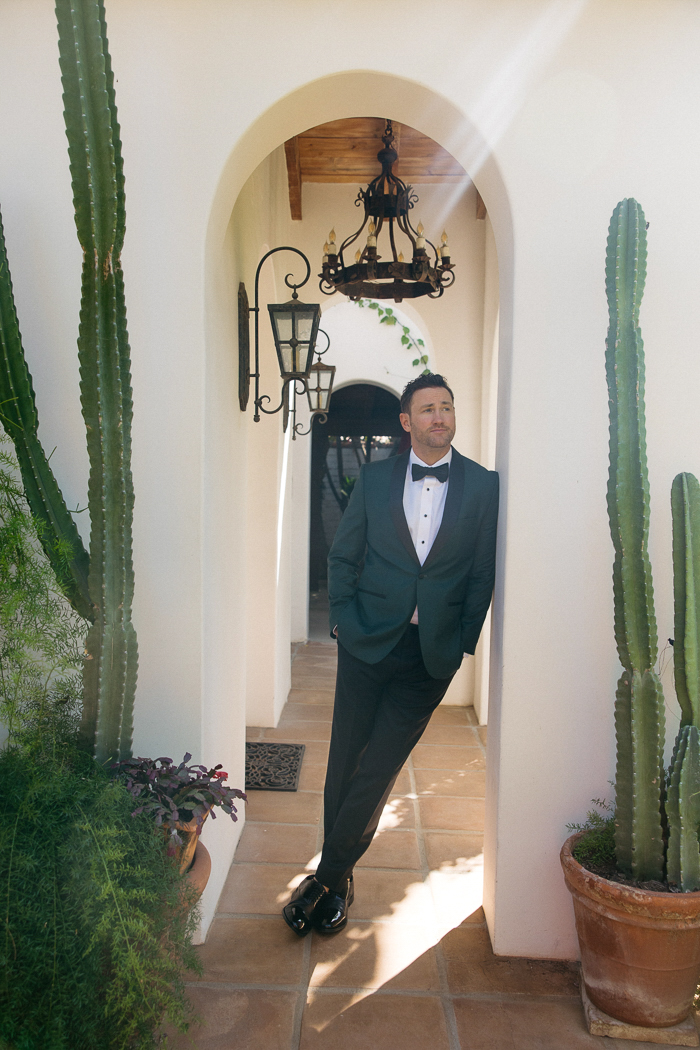
This venue carries a sense of history and layered personality that immediately sets the tone for your wedding day. Its architectural presence and established character mean every design choice should complement what’s already here, not compete with it. Rather than starting from a blank slate, you’re stepping into a setting that has been thoughtfully shaped over decades—one that naturally elevates the overall wedding experience.
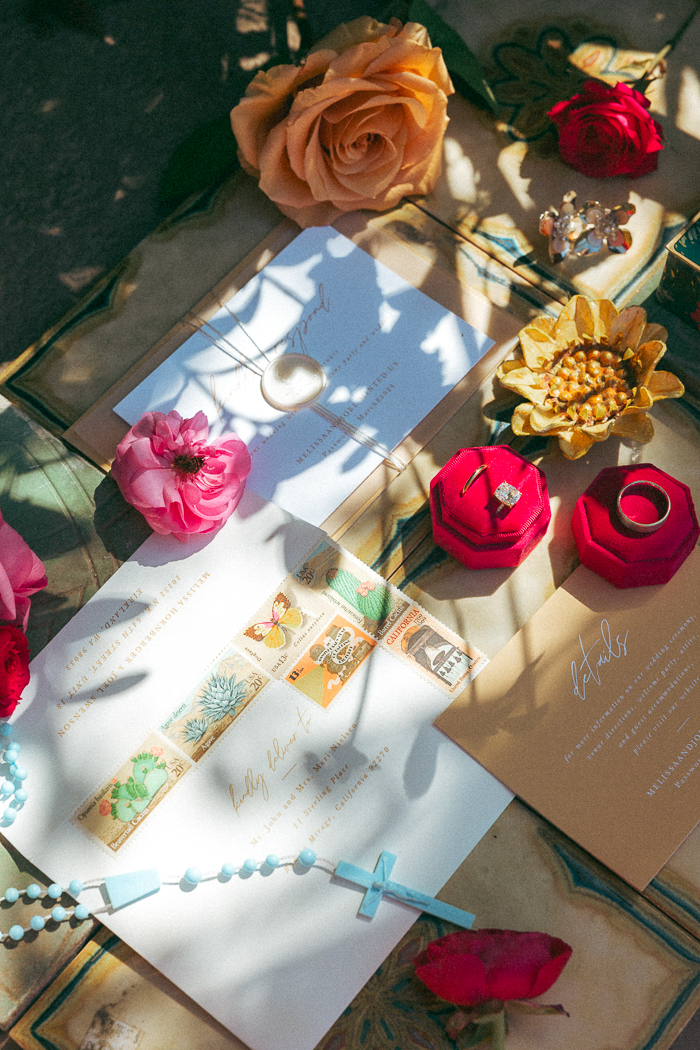
Take a look at what happens when a design team really gets it—this is what full visual payoff looks like. You can tell right away—the photos understand the space, and the design follows suit. Nothing is trying to quiet it down. It just builds on what’s already there, and that’s when it really works. I love when that happens.
Ceremony Design: This Is Where It Gets Interesting
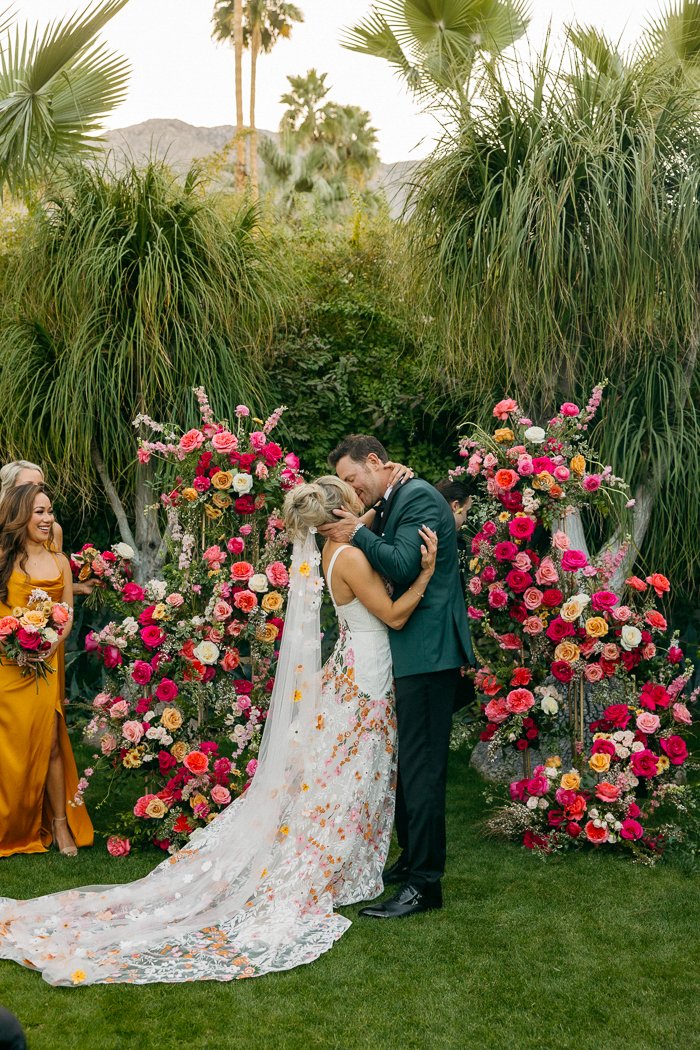
And then you look at how the ceremony is set—and it’s clear someone made decisions. The layout pulls the guests in close, but not so close that it crowds the space. There’s still room for the landscape to breathe behind them—the palms, the layered greenery, the mountains sitting just far enough back to frame everything without competing. And instead of interrupting that, the florals work right along with it.
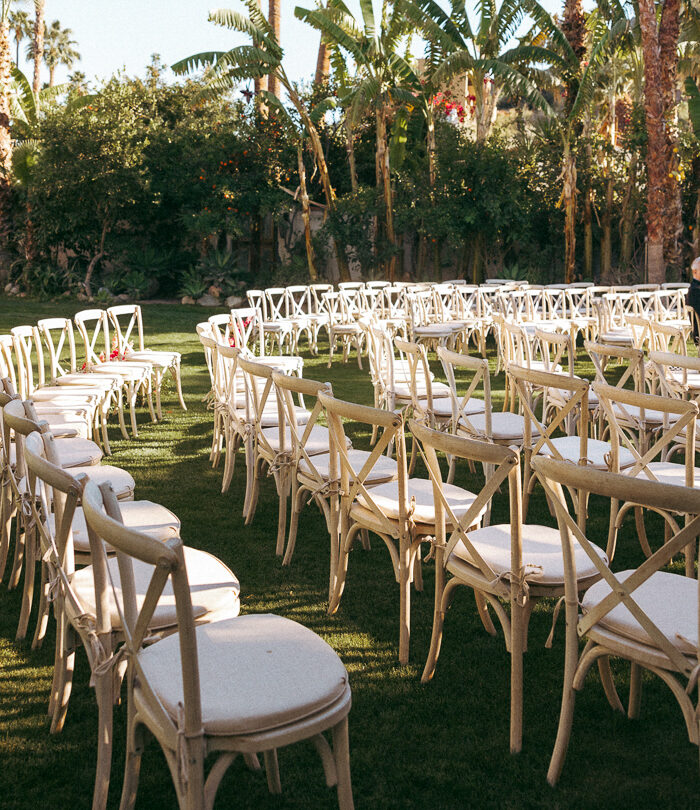
Rather than one central installation, you get two grounded, asymmetrical arrangements flanking the couple. They frame the moment without blocking it, letting your eye move through the entire scene—from the florals, to the layers of green, to the mountains beyond.
And that color—it matters.
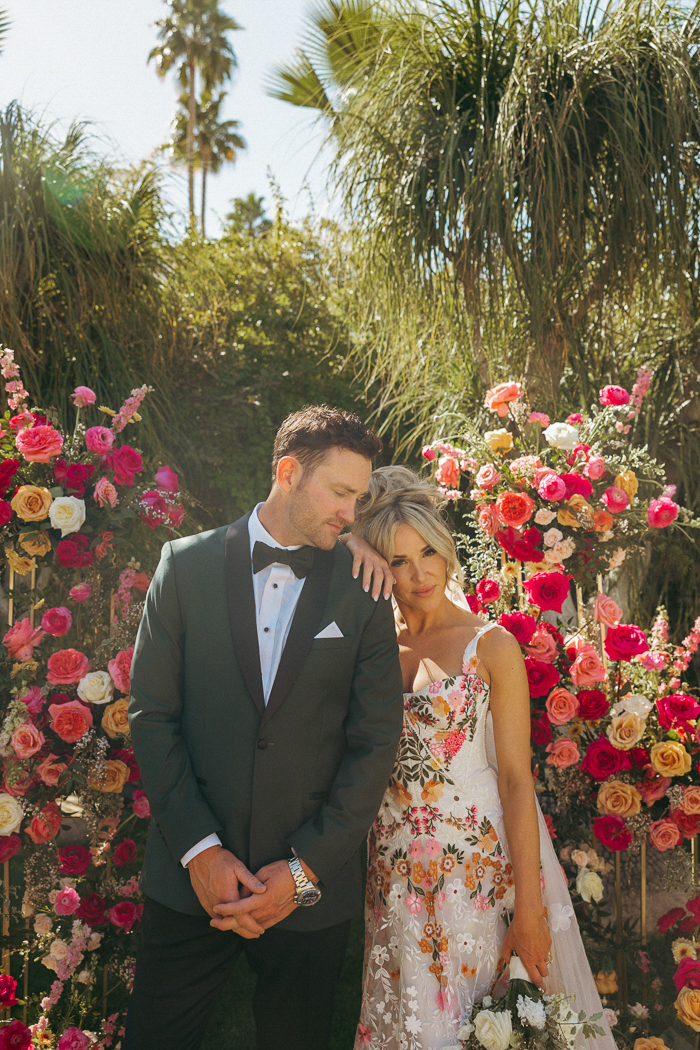
Those saturated pinks, corals, and saffron cut through all that green just enough to break it up and give the space dimension, without ever pulling focus away from the couple.
Reception Design: Carrying the Story Forward
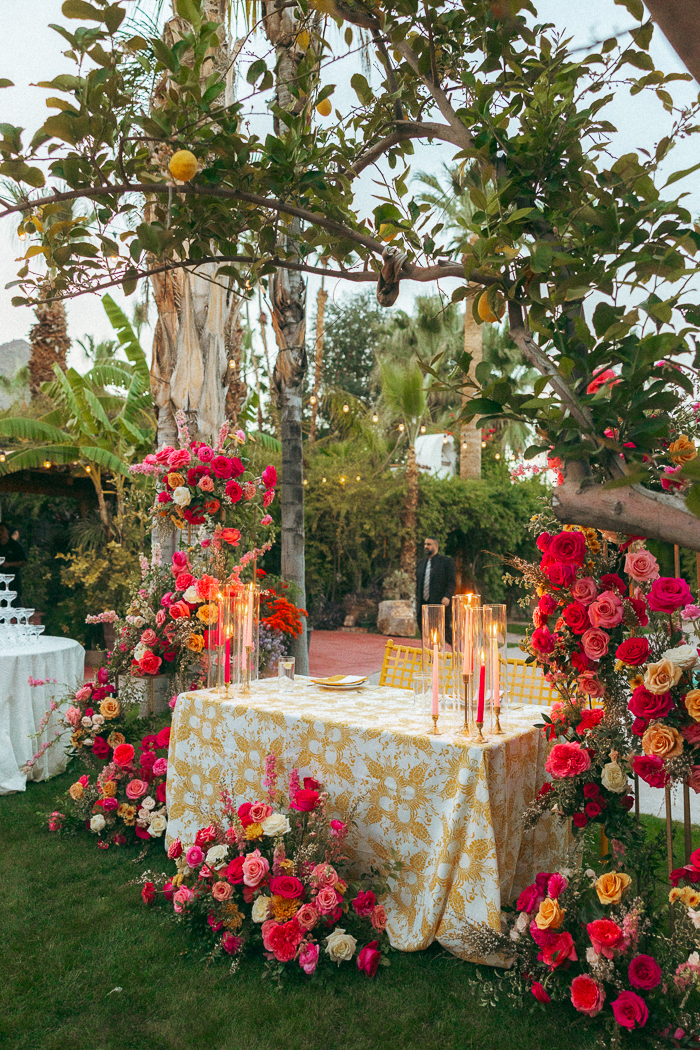
And then the reception picks it up—and doesn’t miss. You’re not walking into a completely different look. It feels like a continuation, just slightly shifted as the light changes and the space tightens.
Long tables run through the space in a way that feels intentional, not forced. They create direction, give the eye somewhere to travel, and bring the guest experience into a shared rhythm instead of breaking it into smaller, disconnected moments.
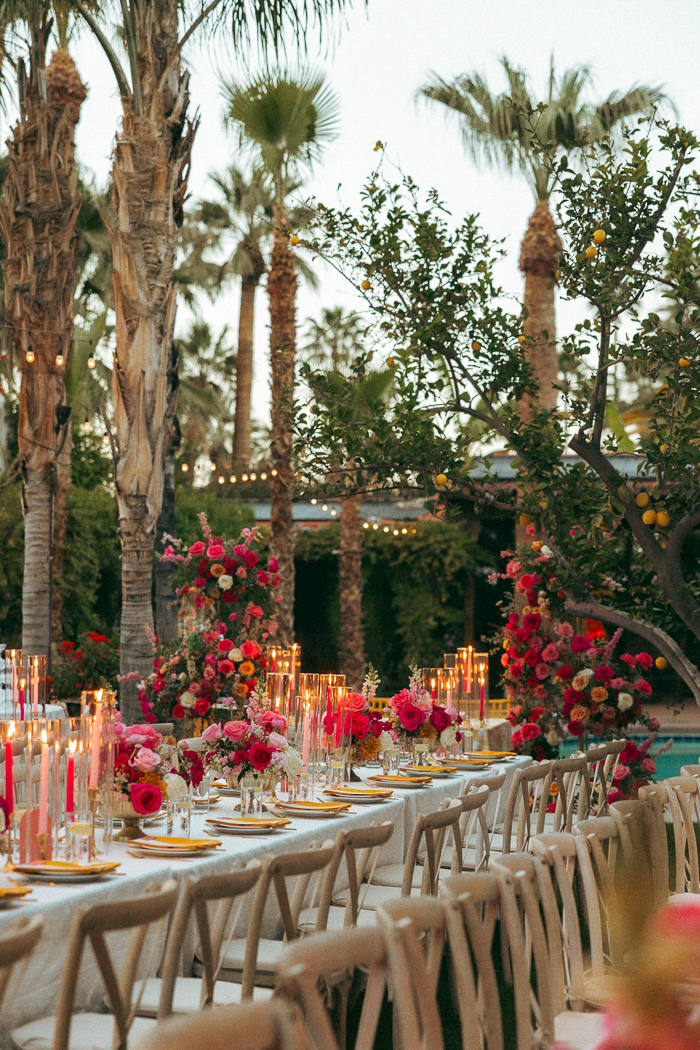
The linens stay soft—nothing too crisp, nothing overly formal. They fall naturally, which matters against a setting that already has so much structure. It keeps things from feeling stiff. And then the color comes back in—not louder, just layered differently. Florals are lower, more gathered, but still carrying that same mix of saturated tones. They don’t try to recreate the ceremony moment. They echo it—just enough to keep everything connected.
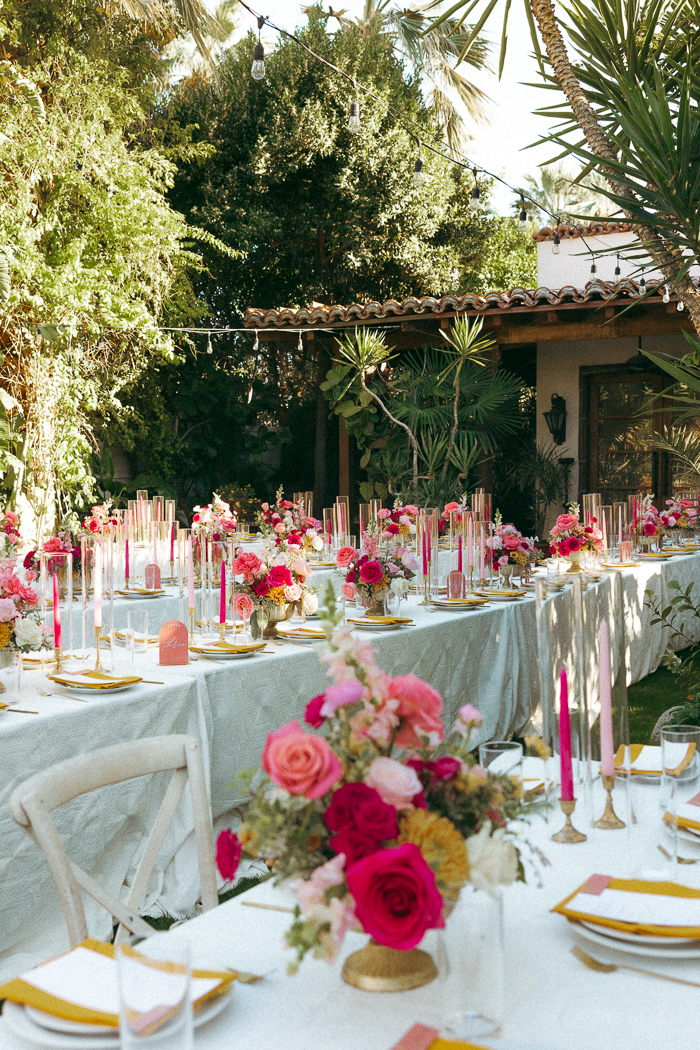 You see it in the details too. The place settings stay grounded—nothing overly polished, nothing pulling focus. Glassware catches the light just enough. Flatware feels warm against the tones of the table. It all works quietly in the background so the color and the space can stay forward.
And the chairs—this is where the consistency pays off. Keeping that same light wood tone carries the warmth through the entire event. It softens the lines of the tables and ties everything back to the ceremony without feeling repetitive. You’re not introducing something new—you’re reinforcing what’s already working. That’s what keeps the whole thing from feeling over-designed. It’s edited.
Nothing extra. Nothing competing. Just a series of decisions that keep building on each other.
The Design Move That Made This Work
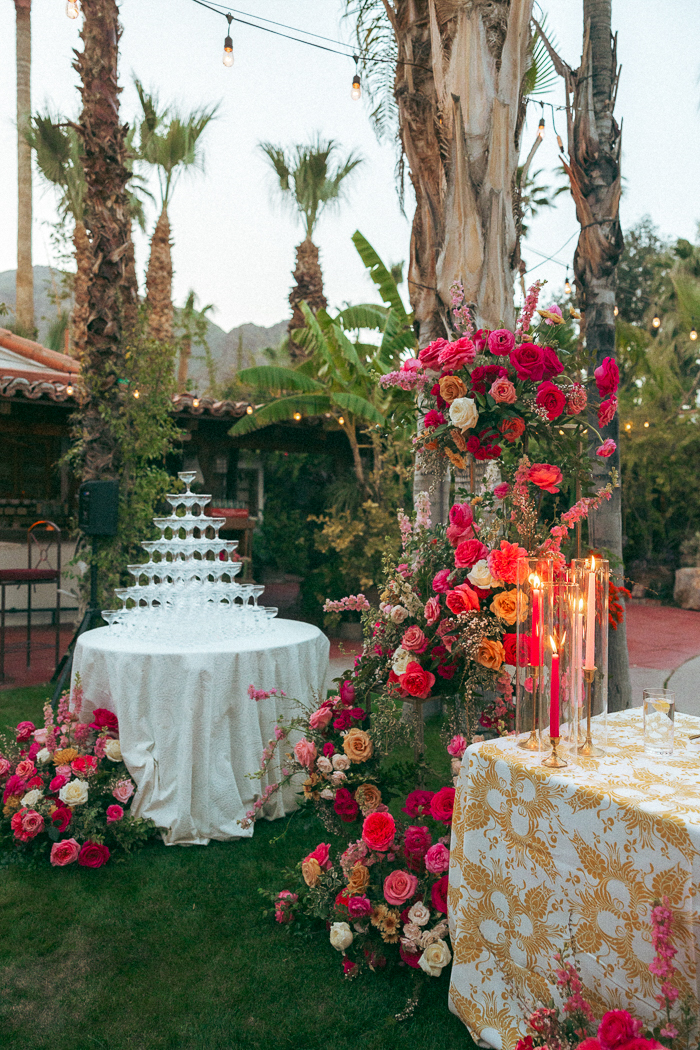
Here’s the decision that really makes this wedding work: They didn’t try to add structure where it already existed. No oversized arches. No heavy installations competing with the architecture. They let the villa, the palms, the built-in lines of the space do that work—and used florals and color to enhance it. That restraint is what gives everything else permission to shine.
The Mistake I See All the Time
I see the opposite happen all the time. Couples come into a space like this and try to tone it down. Neutral palette, softer moments, pulling everything back. And what happens? The venue loses its edge. Because this isn’t a quiet space. It’s layered. Expressive. A little dramatic. When you fight that, the design falls flat.When you lean into it—the results speak for themselves.
A Detail Worth Stealing
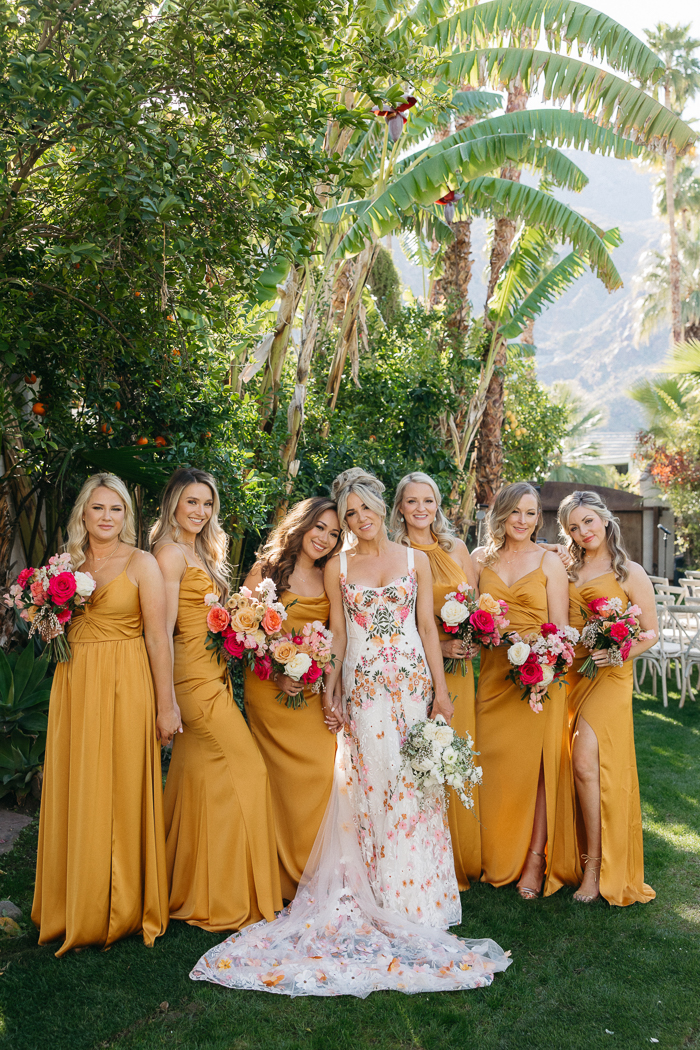
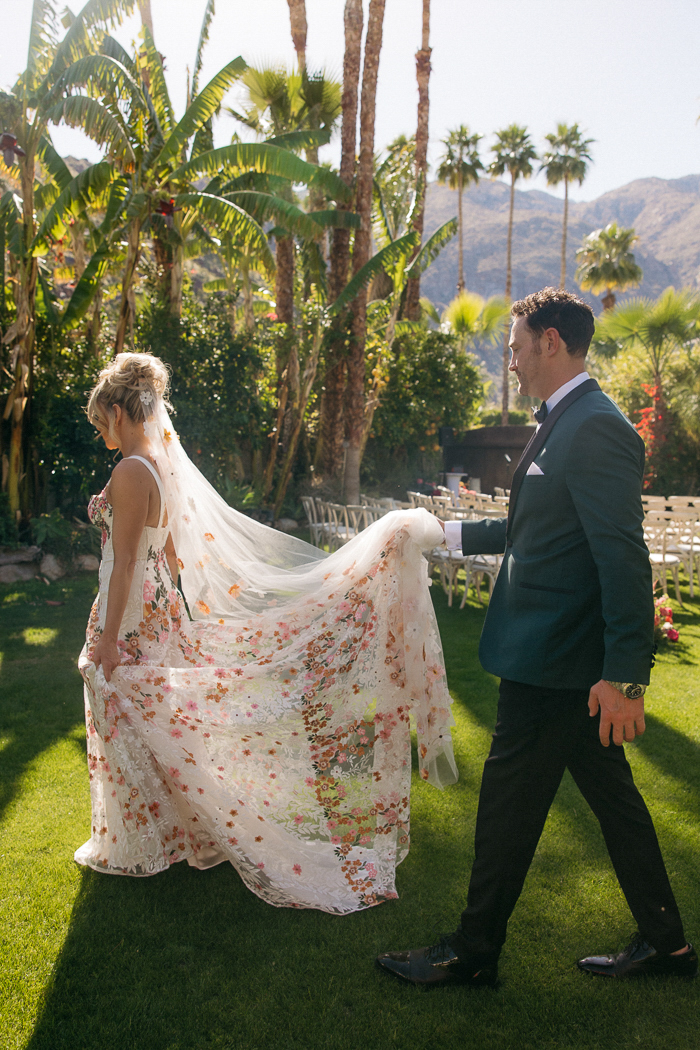
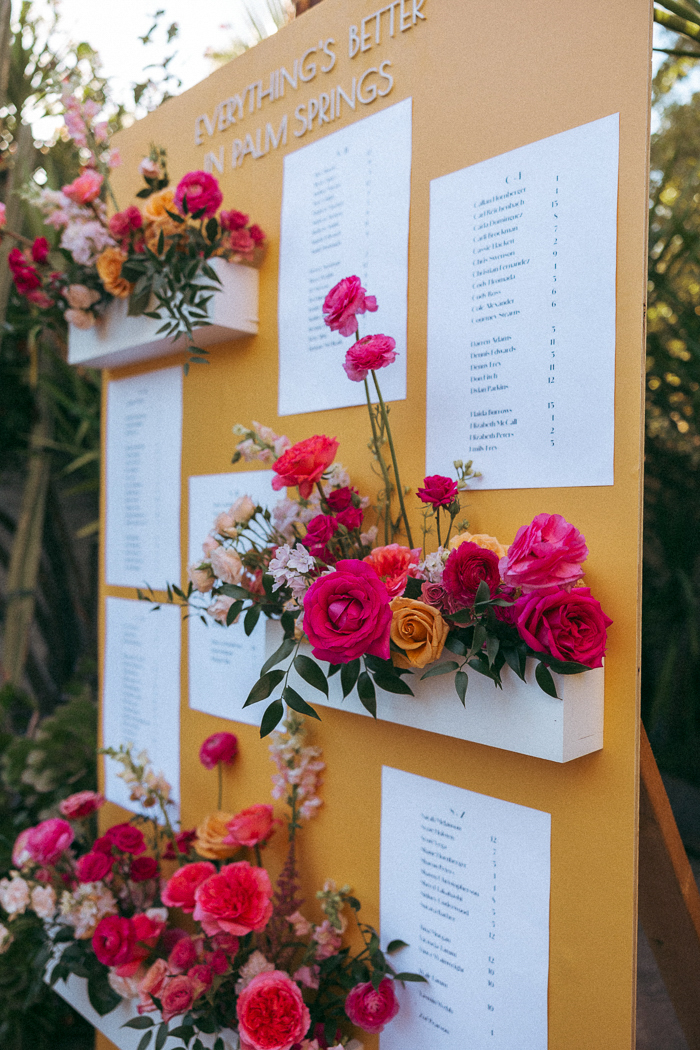
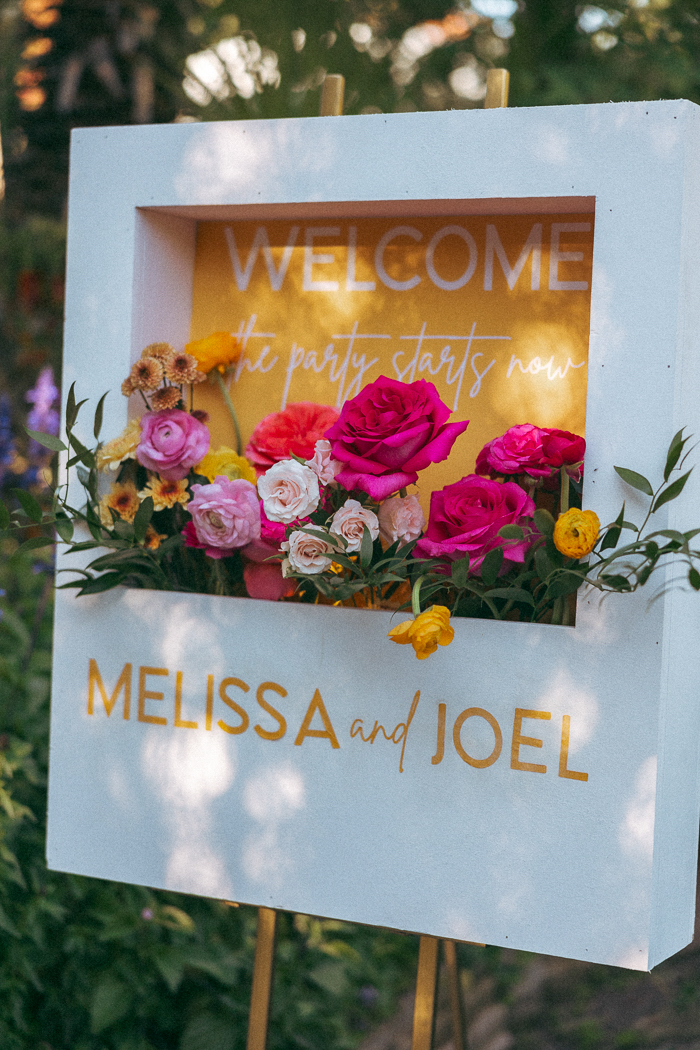
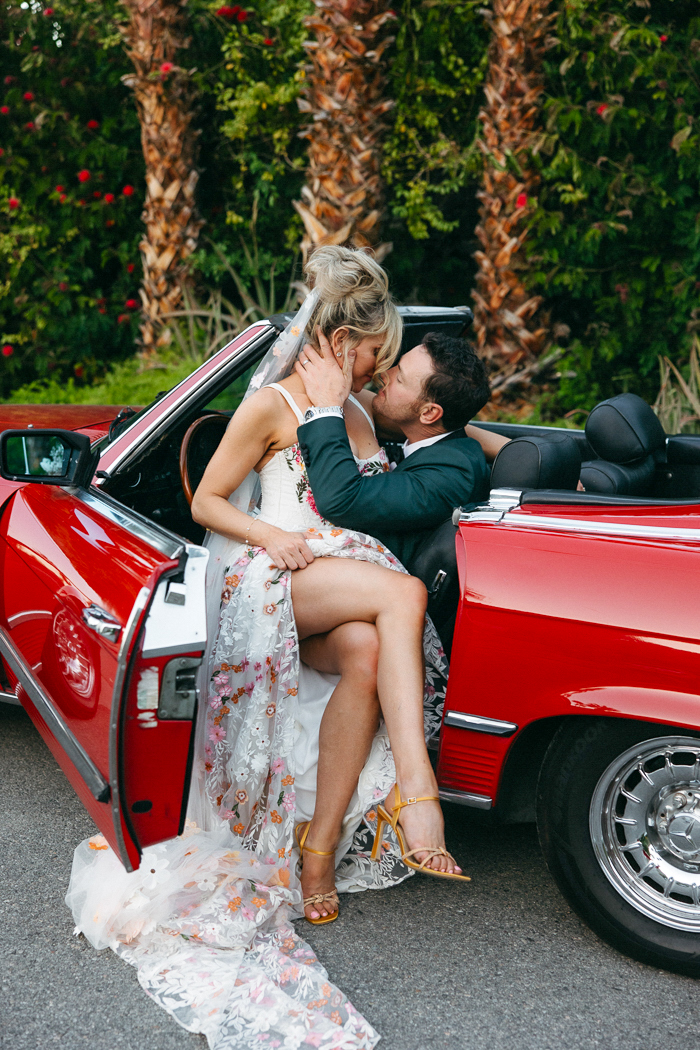
One detail I would absolutely steal: how color shows up beyond the obvious. Not just in centerpieces—but in the floral detailing on the gown, the marigold tones in the bridesmaid dresses (which is a bold choice in itself), the signage, the escort display. It creates a visual rhythm that carries throughout the entire day. It’s not one focal point. It’s a series of them.
Why This Works Her
Because it speaks the same language as the space. Spanish Revival architecture isn’t minimal. It’s textured, warm, expressive. It already has depth. So when the design meets it with that same level of confidence—rather than trying to simplify it—you get harmony. Nothing feels added.
Everything feels aligned.
Gloria’s Planning Note
If I were planning here, I would start with the color already living on the property and build from there. This is not a venue you quiet down—it’s one you meet with just as much confidence. At the end of the day, this works because it doesn’t try to change anything.
It recognizes what’s already there—the architecture, the history, the light, the landscape—and responds to it. And when that happens, the design doesn’t just look good.
It feels like it belongs.
About This Blog
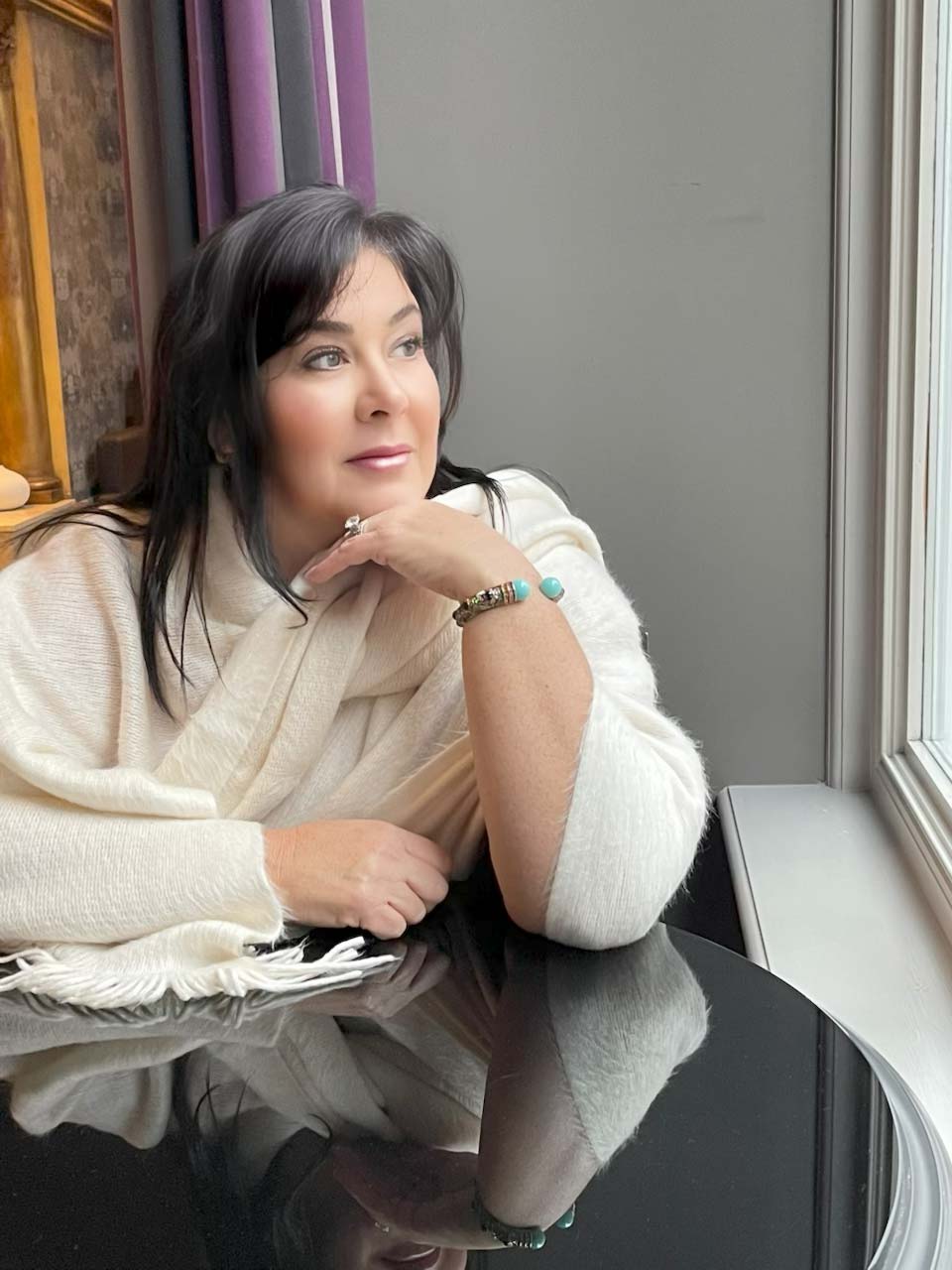 I Do Venues is a collaborative, editorial guide to California wedding venues – built with insight from wedding professionals who know these spaces beyond the highlight reel.
I’m Gloria, a longtime wedding industry professional, curating and contributing alongside planners, designers, photographers, and venue teams to help couples make venue decisions with clarity and confidence.