
Blog
Ask the Expert: Letting the Vineyard Lead BR Cohn Winery
Designing a Vineyard Wedding That Lets the Landscape Lead at BR Cohn Winery
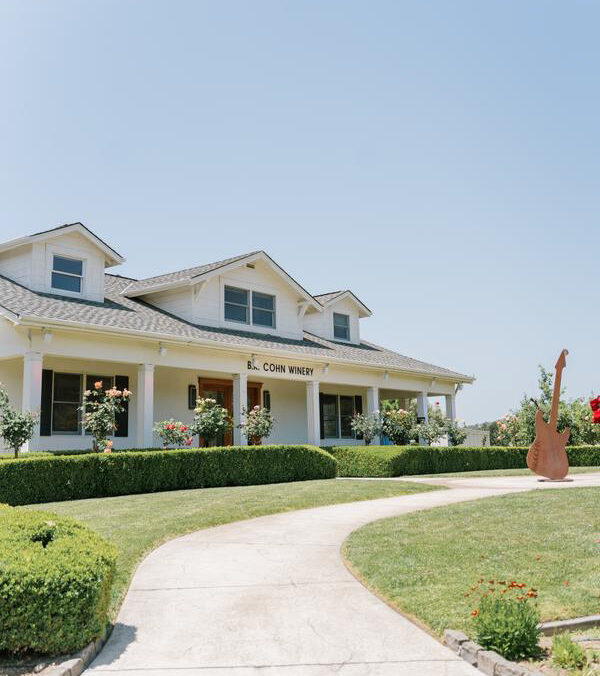
Ask the Expert is a series where Gloria Atherstone, founder of IDo Venues, takes a closer look at real weddings and explains why the design works so beautifully within the venue. There are ceremony spaces that feel designed. And then there are places where the landscape already did the design work long before the wedding planner arrived.
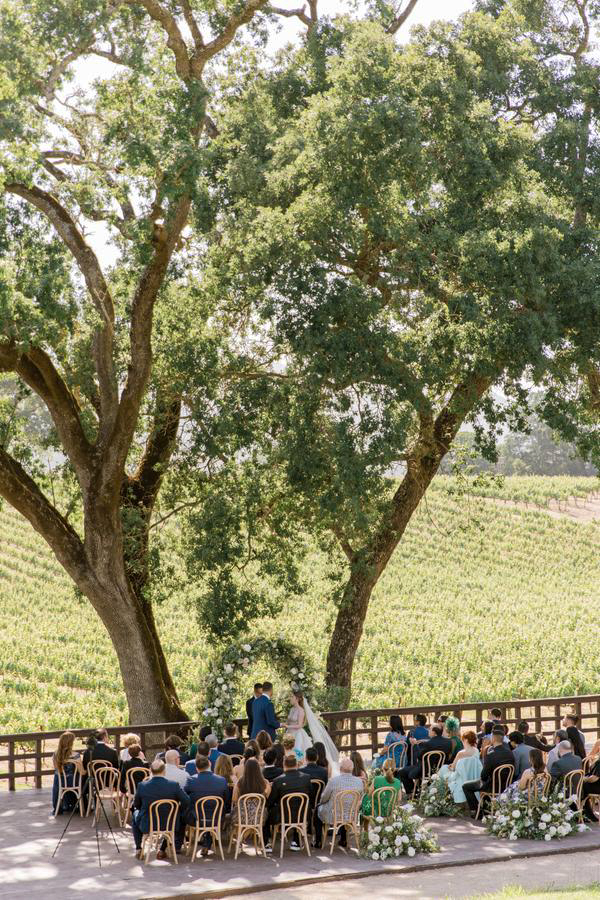
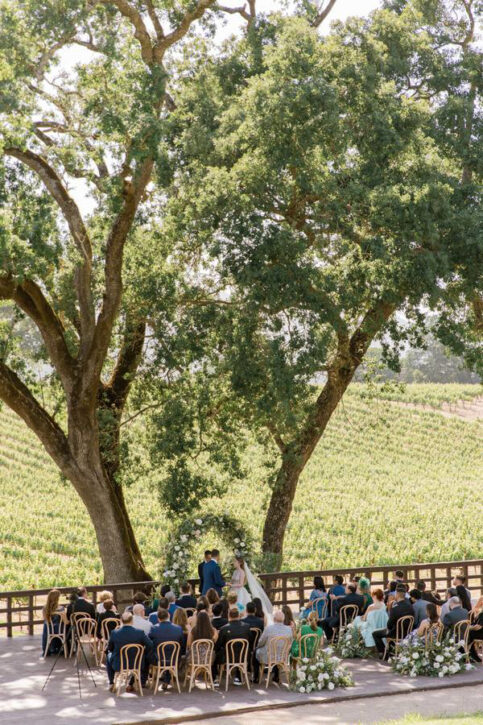
At BR Cohn Winery, the ceremony deck sits high above the vineyard rows, framed by two enormous valley oak trees whose branches stretch wide enough to feel almost architectural. Guests take their seats and the first thing they notice isn’t the floral arch or the chairs — it’s the view: long vineyard lines rolling across Sonoma Valley toward the distant hills.
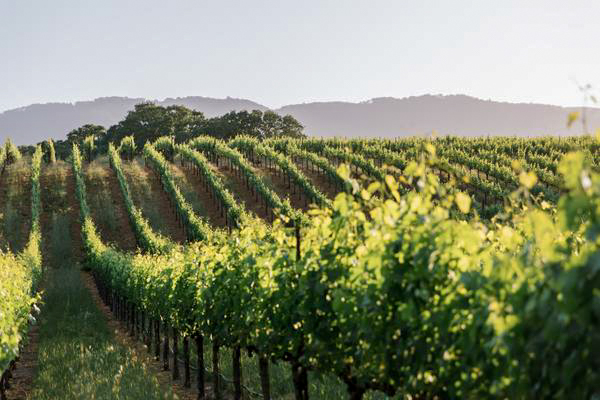
When a setting is this strong, the smartest design decision is restraint.
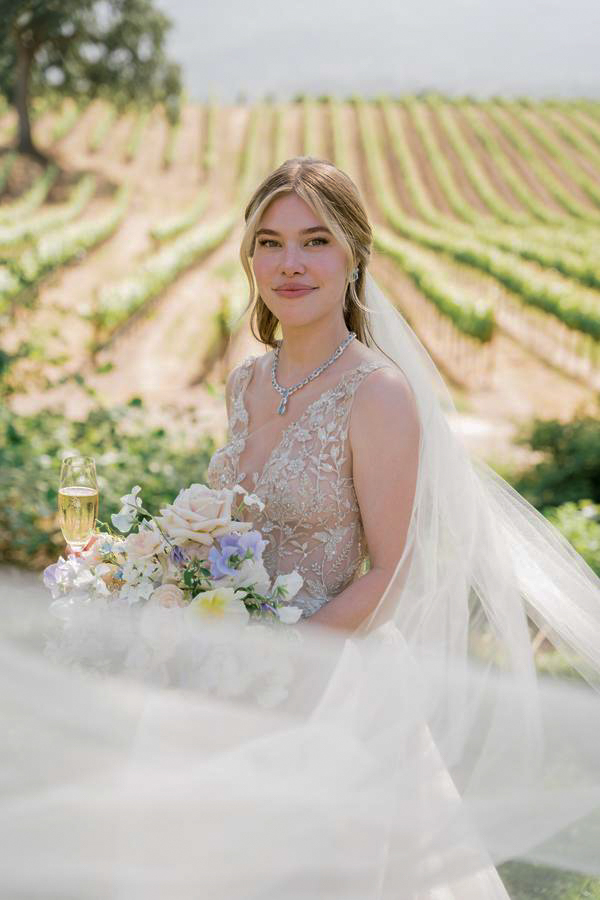
The team behind this celebration clearly understood that. The photographer captures the day in soft, natural light, while the floral and design choices lean into a garden palette that feels perfectly at home in wine country. Nothing tries to compete with the landscape. Instead, every element quietly supports what is already there. And that’s exactly why the design works.
The Ceremony
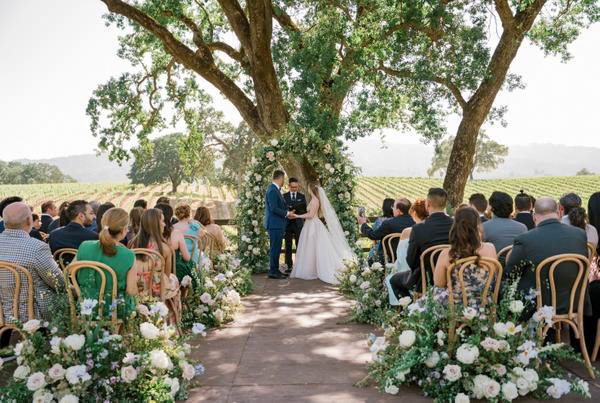
The ceremony layout takes full advantage of the oak canopy and the vineyard views beyond. bentwood chairs line the deck in soft rows that feel organic rather than rigid, their warm wood tones echoing the bark of the surrounding trees. Along the aisle, garden-style floral arrangements spill gently across the ceremony platform rather than rising vertically — a subtle design decision that keeps the sightlines open to the vineyard behind the couple.
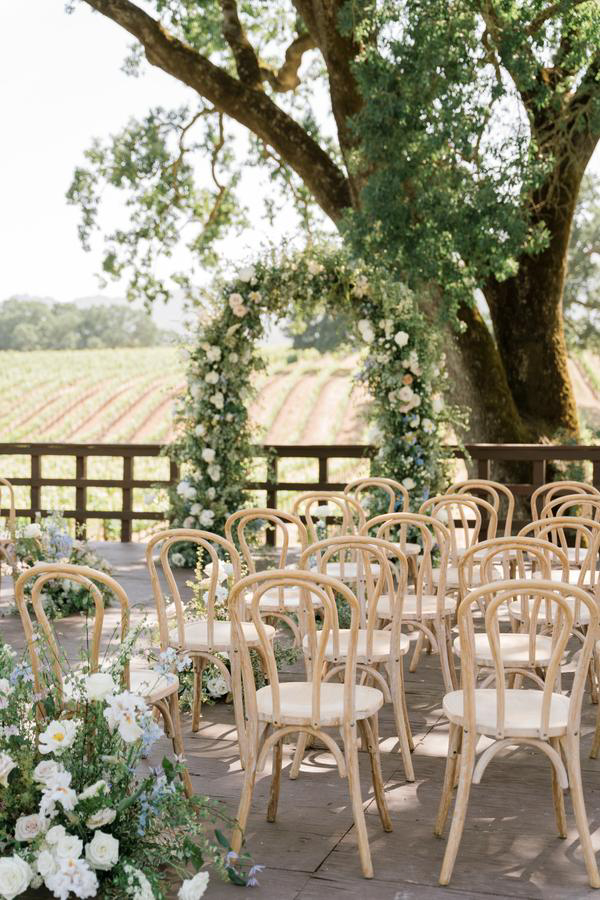
At the altar, a lush floral arch mirrors the curve of the tree branches overhead. Garden roses, sweet peas, and delicate greenery create an installation that feels less like a constructed structure and more like a garden growing naturally beneath the oaks.
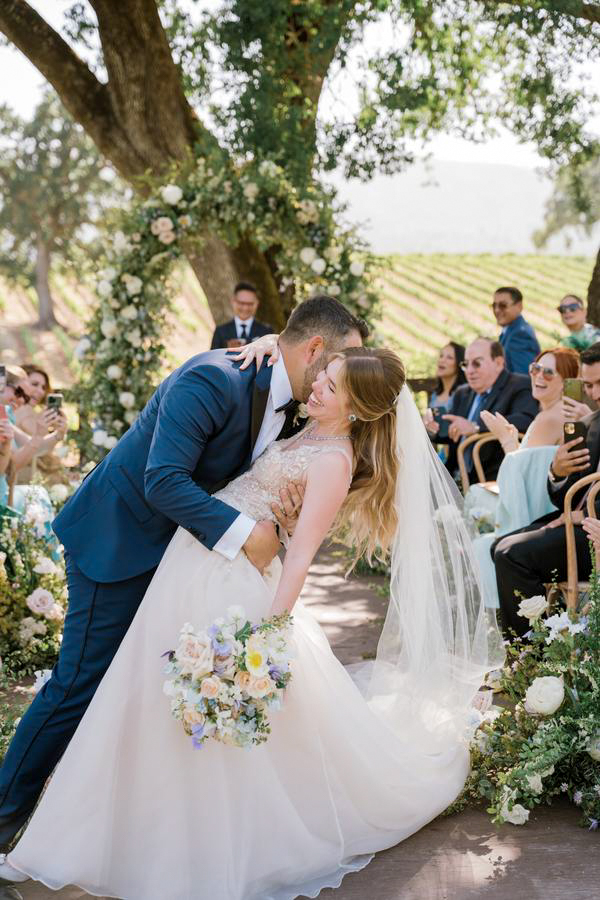
Placed between the two towering trees, the arch becomes part of the landscape itself. The trees provide the cathedral ceiling. The vineyard provides the backdrop. Everything else simply frames the moment.
The Floral Palette
Looking closely at the floral work reveals a palette that feels incredibly intentional. garden roses, pale sweet peas, airy greenery, and touches of soft blue delphinium create arrangements that feel light and natural rather than overly structured. Sweet peas in particular bring a softness and movement that keeps the florals from feeling heavy.
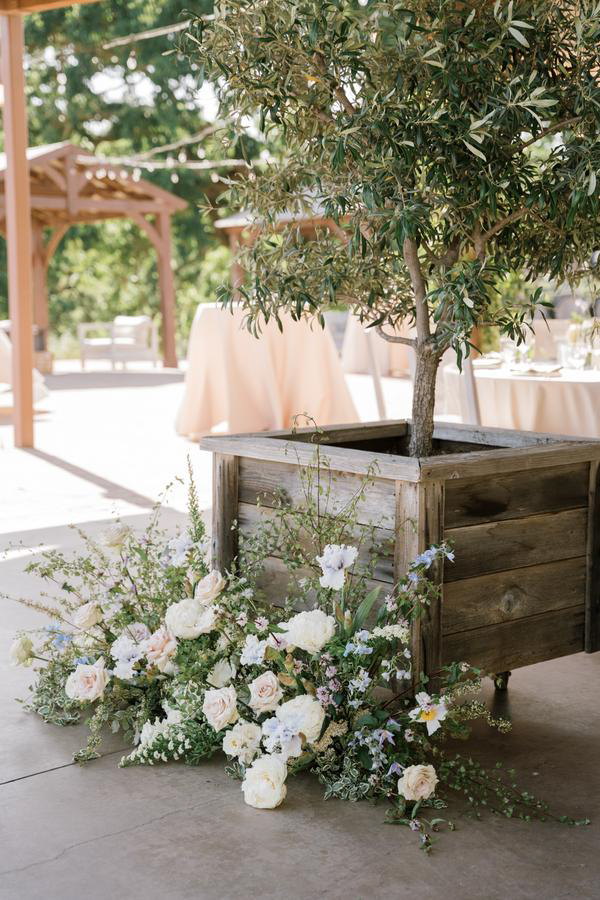
This garden-forward floral style works beautifully in vineyard settings. Wine country landscapes already provide a rich green backdrop, so florals that feel airy and seasonal allow the scenery to remain part of the visual story. Even the table arrangements follow the same philosophy — abundant but low, romantic but relaxed.
The Reception Pavilion
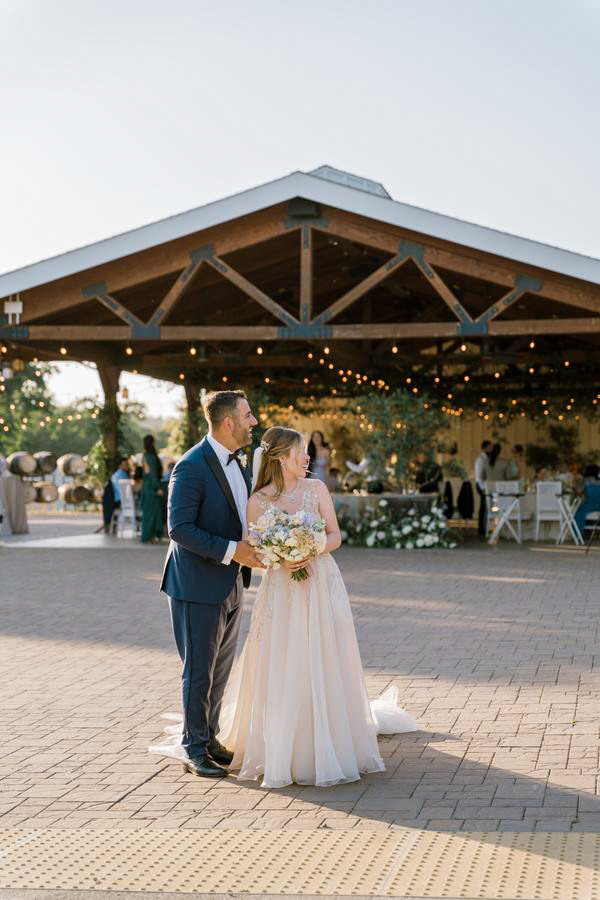
The reception pavilion design is another moment where restraint really pays off
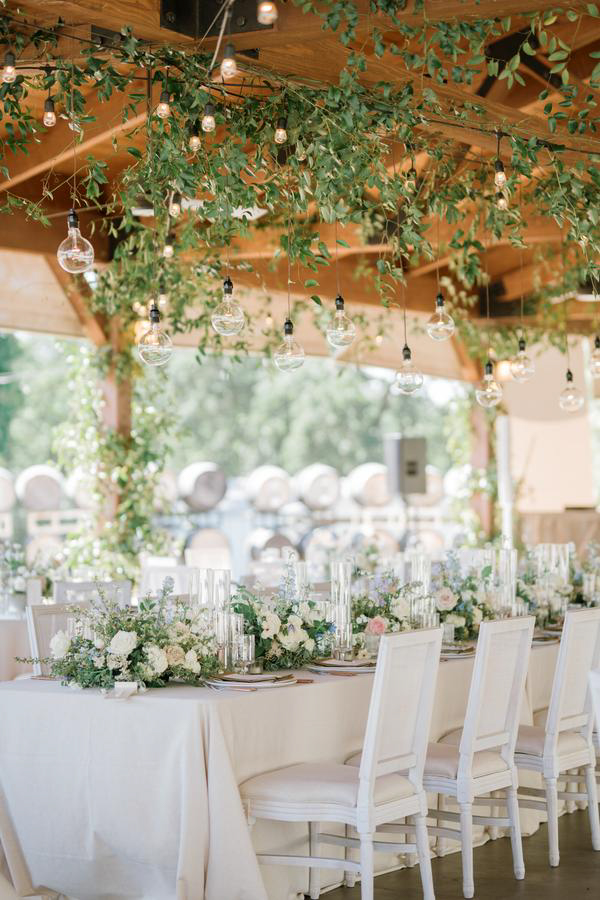
Rather than filling the pavilion with heavy draping or dramatic installations, the designers leaned into the beautiful timber structure of the roof itself.
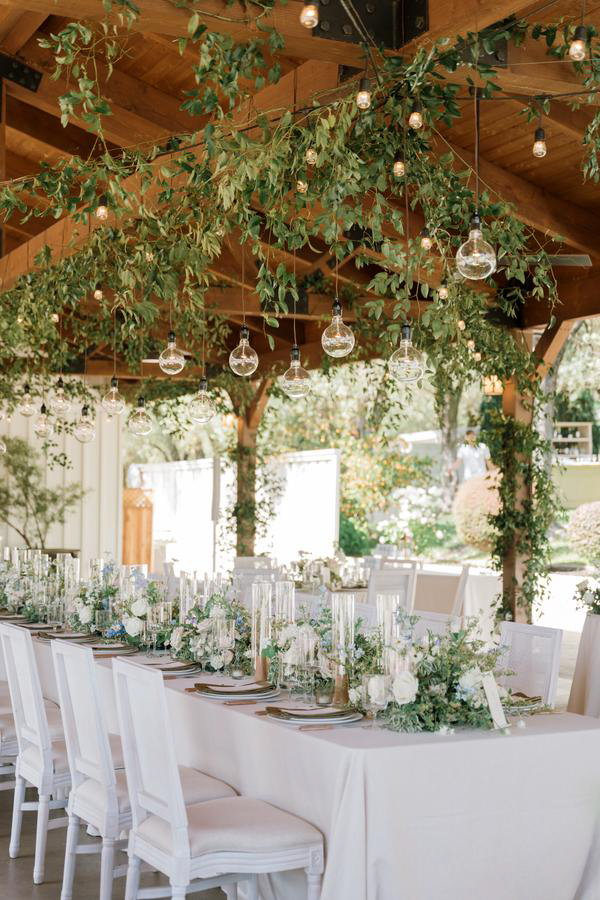
Greenery garlands run along the beams and café bulbs hang gently overhead, creating just enough visual texture while letting the warm wood architecture remain the star. And then there’s the table layout.
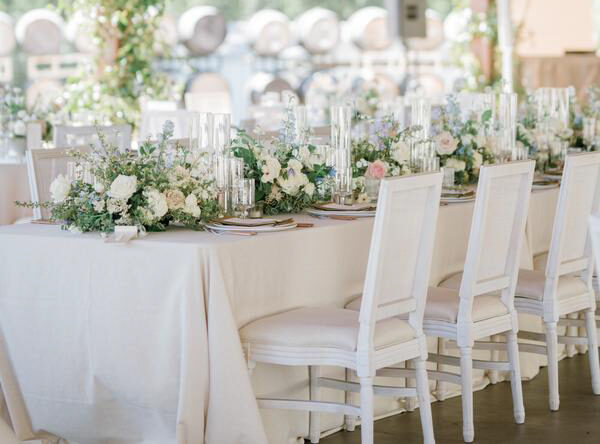
Long tables soften the space and encourage conversation, while the floral arrangements stay low and garden-like, echoing the ceremony palette. White chairs and neutral linens keep the palette clean so the greenery and wood tones carry the atmosphere. It’s elegant without feeling formal — exactly what wine country receptions do best.
Tablescape Details
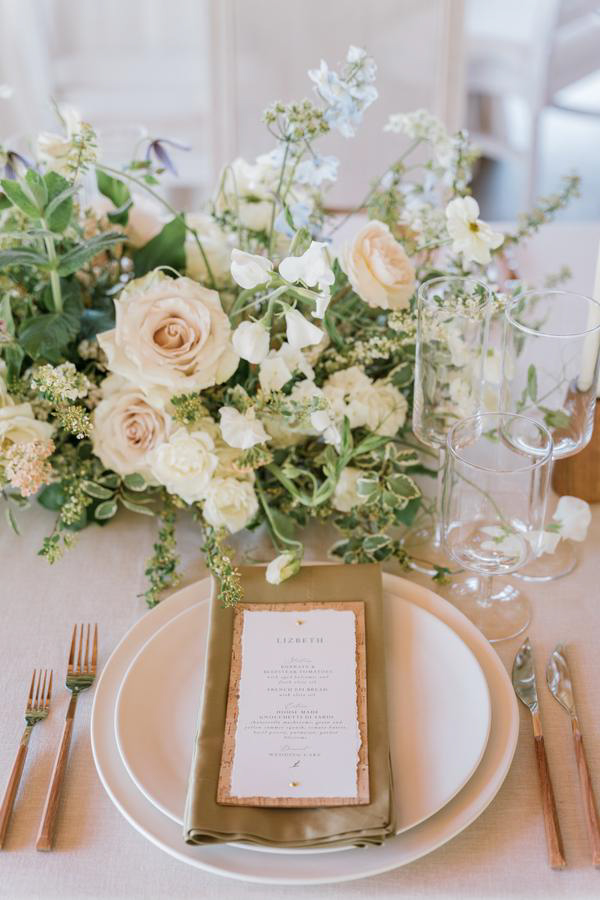
The table settings continue the soft layering of natural tones. Ivory linens provide a clean foundation, topped with simple white dinnerware and delicate gold flatware that adds a subtle warmth to each place setting. Olive-toned napkins are folded neatly beneath handmade paper menus with raw deckled edges, bringing in another layer of organic texture.
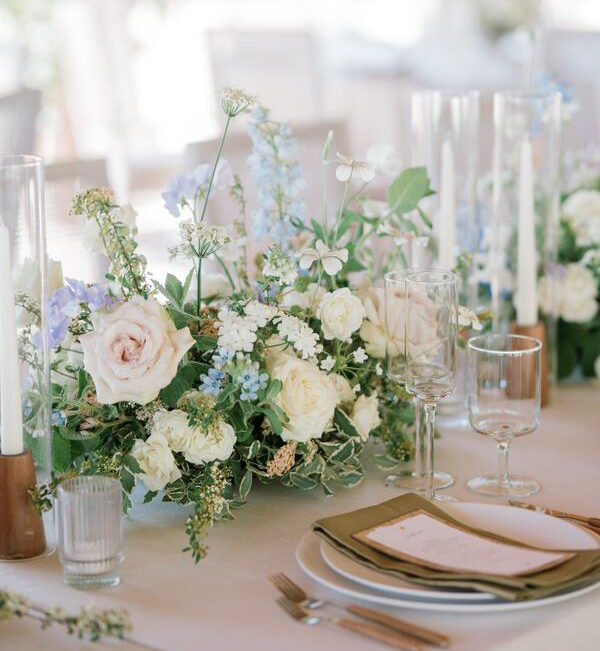
Low floral arrangements stretch across the tables in soft clusters of garden roses, sweet peas, and greenery. Because the florals stay low, guests can easily see one another across the table — a small design choice that makes the reception feel more conversational and relaxed. It’s romantic without being overly styled, which suits a vineyard setting perfectly.
Thoughtful Guest Experience
Several of the smaller design elements reveal how carefully the couple considered the guest experience throughout the day.
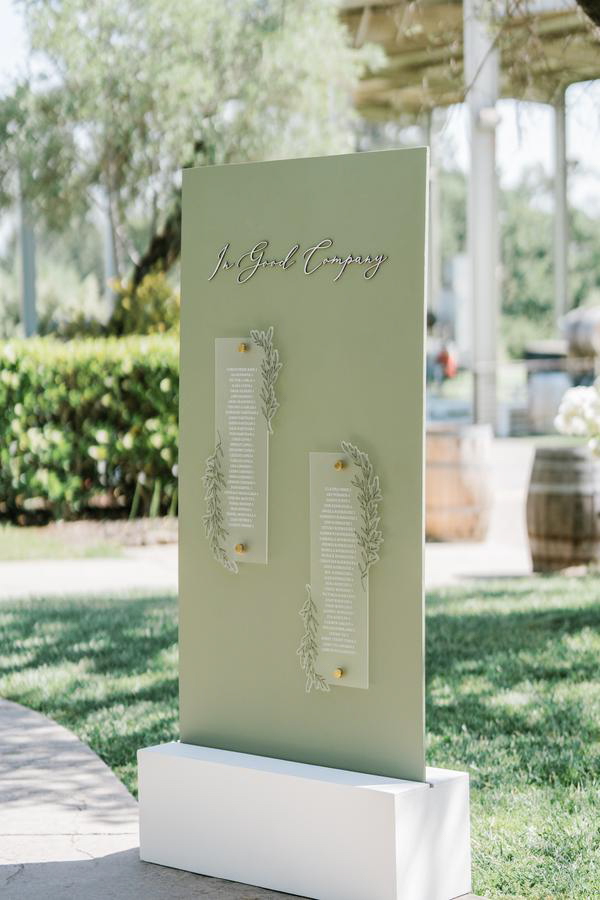
A modern sage green seating display welcomes guests as they move into the reception area. Rather than traditional escort cards, the seating assignments are presented on a tall board with delicate botanical illustrations and acrylic name panels — clean, elegant, and easy for guests to navigate.
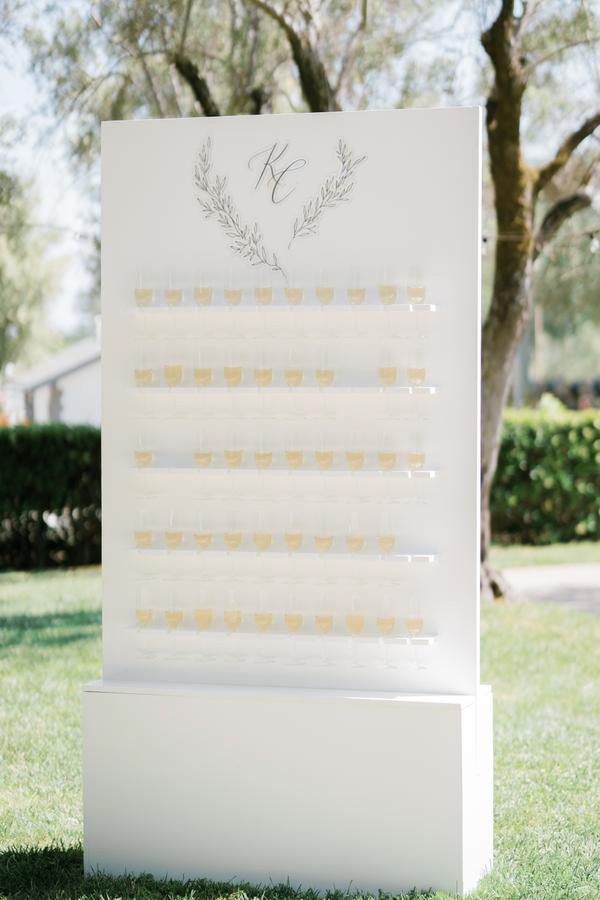
Nearby, a champagne welcome wall offers guests a celebratory sip as they arrive for cocktail hour. Rows of glasses arranged neatly on a crisp white display create a playful moment while still fitting seamlessly within the overall design aesthetic.
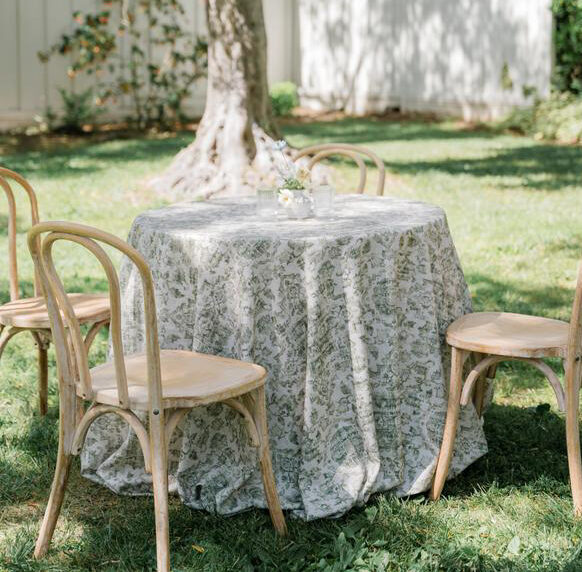
Cocktail tables scattered beneath the oak trees invite guests to linger outside as the evening unfolds. Patterned linens soften the tables while natural wood chairs echo the bentwood seating from the ceremony, keeping the visual language consistent throughout the event. These details may seem small individually, but together they create a celebration that feels thoughtful and cohesive.
A Small Detail That Ties Everything Together
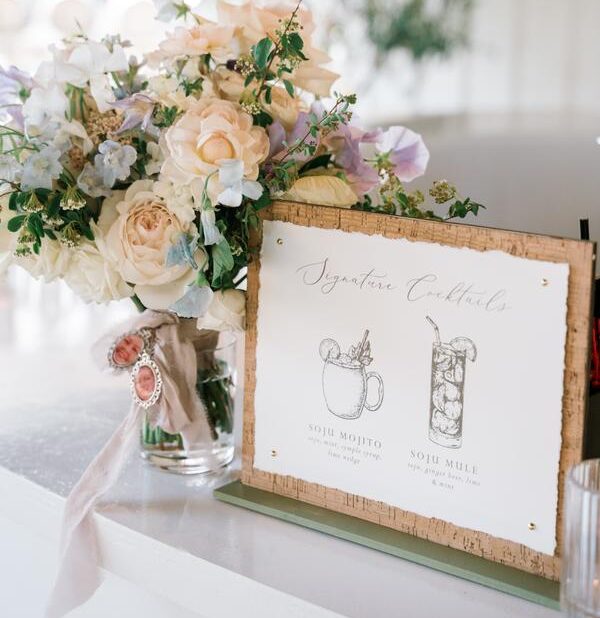
The cocktail signage and bar details reveal another thoughtful layer of design.
The signature cocktails — a Soju Mojito and a Soju Mule — suggest the couple incorporated personal cultural touches into the celebration. Even the bar signage carries the same soft palette and natural textures seen throughout the event. Little decisions like that help a wedding feel personal rather than simply pretty.
Why the Design Works at This Venue
What makes this wedding especially successful is how well the design team trusted the natural character of the venue.
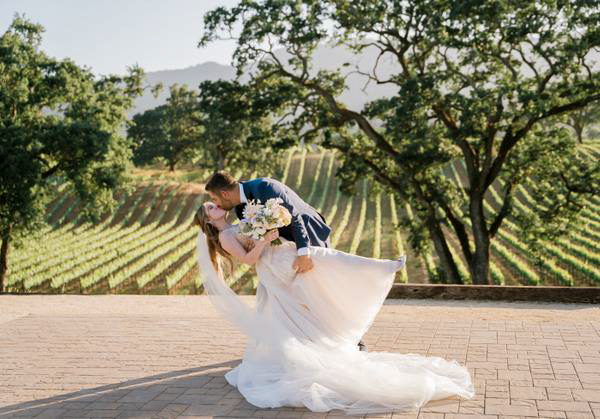
The vineyard provides the landscape.
The oak trees provide the architecture.
The pavilion provides the structure.
Everything else — the florals, chairs, linens, and lighting — simply supports those elements. Too often couples feel pressure to fill every corner of a venue with décor. But when the setting is already this beautiful, the most sophisticated design choice is knowing when to step back and let the environment lead. That balance is exactly what makes this wedding feel so effortless.
A Detail Worth Stealing
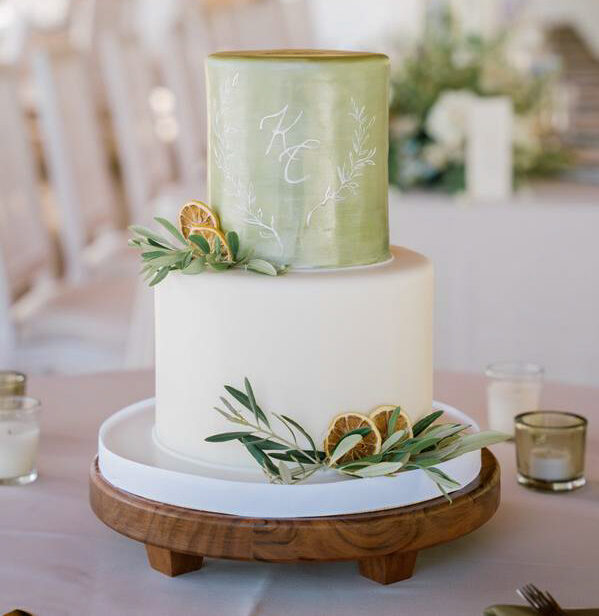
The citrus and greenery accents on the cake.
It’s a small design moment, but it perfectly echoes the natural palette of the venue. The soft green tier, delicate olive branches, and dried citrus details feel fresh, seasonal, and completely at home in wine country. Sometimes the smallest design touches tie everything together.
Gloria’s Planning Note
If I were planning a wedding at BR Cohn, I would always begin with the oak trees and the vineyard views. These two elements define the entire experience of the property. Everything else — flowers, lighting, chairs, linens — should simply frame those moments rather than compete with them. Because when a venue already offers a ceremony beneath a cathedral of oak branches overlooking Sonoma vineyards, the setting already knows how to host the celebration.
Curious is BR Coen right for your wedding?
Explore the full venue profile on I Do Venues →
About This Blog
 I Do Venues is a collaborative, editorial guide to California wedding venues – built with insight from wedding professionals who know these spaces beyond the highlight reel.
I’m Gloria, a longtime wedding industry professional, curating and contributing alongside planners, designers, photographers, and venue teams to help couples make venue decisions with clarity and confidence.